
As we are halfway through 2025, it’s a good idea to take stock (pun intended) of where we might be heading in the markets for the next three months.
I’ve posted before about using this method to evaluate the stock market and assign probabilities to which direction it might be heading. I learned this from a mentor who has used this method for a long time as a way to frame reasonable probabilistic estimates based on current market dynamics.
Statistics and Reports
Based on the futures market and analyst forecasts, there is about a 60% chance the Fed will lower rates in September. When this is combined with the June University of Michigan consumer index report, which showed a sharp rise in consumer sentiment for the first time in six months, it creates a favorable environment for markets to respond well to rate cuts.
Here are four different return scenarios reflecting a range of realistic outcomes:
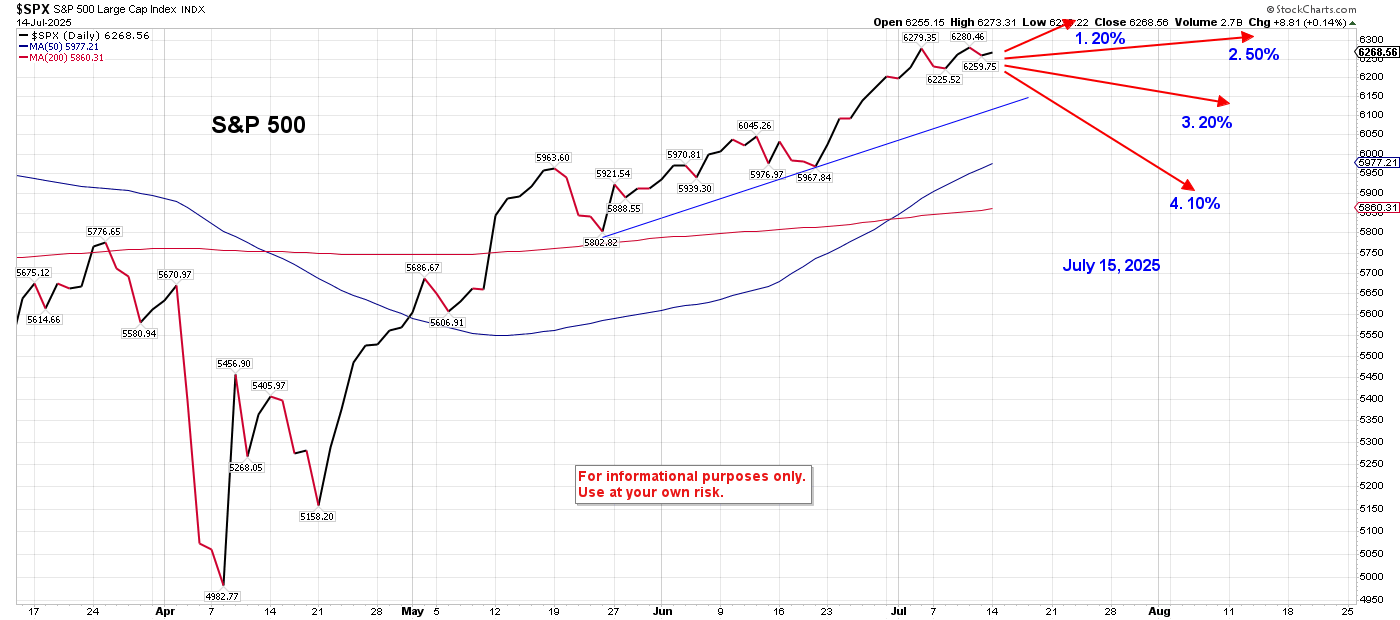
| Scenario | Probability | Rationale |
| 1. Strong Rally | (+8% to +12%) 20% | Rising sentiment and easing inflation expectations support consumer spending and confidence. This offers a good backdrop for a robust market reaction. |
| 2. Moderate Gain | (+2% to +5%) 50% | Most likely scenario: Healthy sentiment supports Fed cuts and boosts market confidence, but lingering consumer caution prevents outsized gains. Labor softness reduces the odds of a strong rally slightly, as growth concerns dial back risk appetite. |
| 3. Flat/Slight Decline | (-1% to +1%) 20% | Potential if rate cuts are seen as preemptive rather than stimulative, though improved sentiment lowers this risk. |
| 4. Sharp Drop | (-5% to -10%) 10% | Still possible if cuts are viewed as panic signal, but improved sentiment reduces the downside likelihood. |
In summary, the markets are leaning bullish at 70%—improved consumer confidence and inflation expectations create a favorable environment for markets to respond well to rate cuts. The neutral to bearish outlook is around 30%—risks remain, but sentiment rebound shifts odds toward positive outcomes.
These are educated estimates based on current trends, not hard forecasts. Market shocks, geopolitical events, or surprise earnings trends could easily shift these odds any time during the next few months. Of course, if the circumstances change, adjustments will be made to reflect current market environments.
______________________________________________________________________________
This post is for informational purposes only. It is not intended as investment advice as each person’s financial situation is different. I strongly recommend working with a financial advisor who can deliver current information to you quickly and offer help with sorting through the various investing options. Bret Wilson is a Financial Advisor with Wilson Investment Services, based in Rockwall, Texas.